Persistence is a +27.8% Lift in Revenue per Visitor
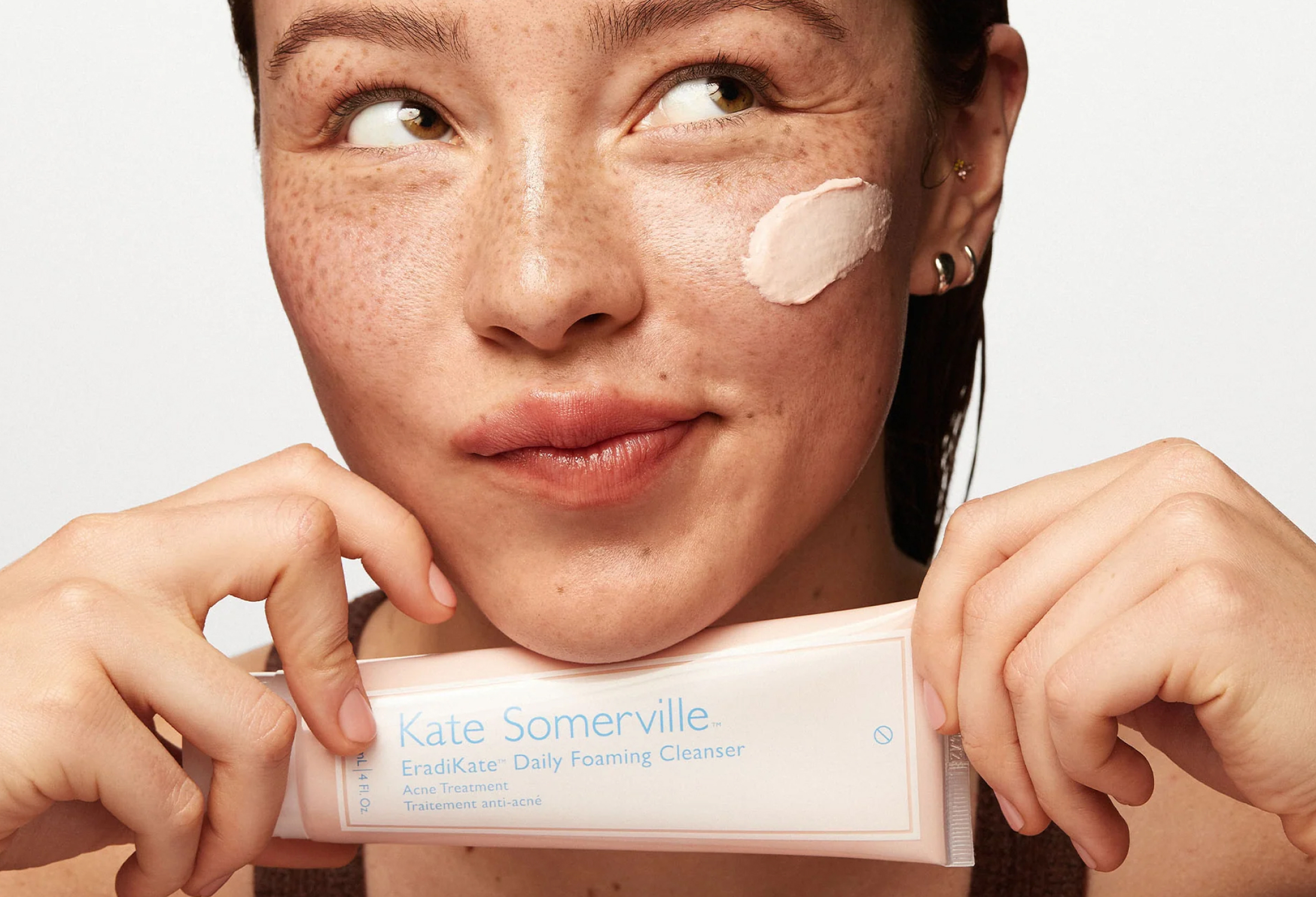
Founded by esthetician and industry pioneer Kate Somerville, Kate Somerville Skincare is built on the belief that healthy, radiant skin is accessible to everyone. The brand bridges the gap between traditional medical spas and advanced skin science, offering a line of high-performance skincare products that deliver clinical-grade results for at-home use. The brand's expertise and reputation have made it a trusted name among a wide range of clients, from Hollywood's elite to everyday consumers.
Lead Product Designer
Owned the end-to-end design of the discovery modules and navigation components.
Data Strategist
Analyzed Shopify revenue data and trends to define the feature's content strategy.
UX ResearcH
Utilized Microsoft Clarity to identify engagement zones and session friction points.
AI Research
Leveraged Gemini to analyze Reddit discussion points regarding skincare purchase intent to inform the next phase of the product roadmap.
Technical Implementation
Partnered with developers to ensure the feature was built as a flexible, schema-driven Shopify section.
Stakeholder Buy-IN
Presented design iterations and behavioral data to Kate Somerville leadership to justify module experiments.
Kate Somerville needed a way to increase the visibility of top-tier products for both new and returning customers. The primary hurdle was finding a winning module that could be rolled out site-wide to consistently move the needle.
🧠 The goal was to validate a homepage discovery module that would increase site-wide conversion rate and revenue per visitor.
I conducted a comprehensive audit of Shopify analytics to establish a performance baseline, identifying high-intent revenue drivers and historical conversion trends. As the project evolved, I integrated session analysis via Microsoft Clarity to better understand user behavior and map specific friction points.
Key focus areas included:
Identifying the most popular pages, such as the homepage, specific collections, and key product pages.
Analyzing sales data to pinpoint top-selling products and trends.
Customer Feedback and Sentiment
Gauging public perception by analyzing social media sentiment on platforms like Reddit and and reviewing customer feedback on product pages.
Evaluating how existing user interface and experience designs may be aiding or impeding the sales process.
Ensuring all findings and recommendations align with the goals set by the Kate Somerville team.
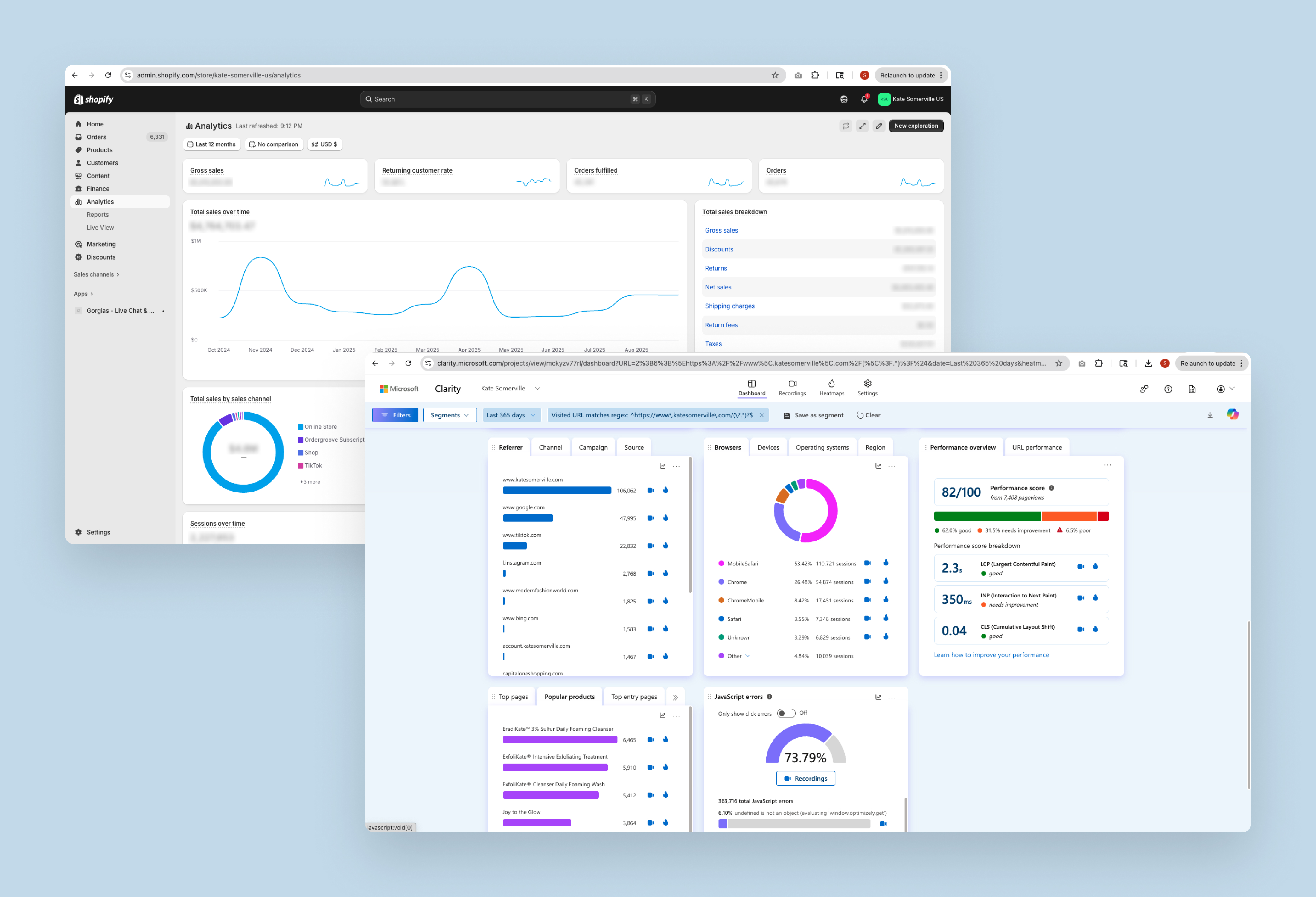
Shopify Analytics & Microsoft Clarity dashboards.
Iteration 1:
The Hero Product Spotlight
THE HYPOTHESIS & DESIGN
I designed a dedicated homepage module for ExfoliKate® Intensive Treatment. The hypothesis was that surfacing a proven, flagship SKU would provide a clear entry point for new and returning users.
THE OUTCOME
Conversion rate decreased as did revenue per customer, with sales for this specific product decreasing by 25%.
NOTES & CONSIDERATIONS
Initial performance was attributed to external noise (a site-wide sale running congruently to the test window) and a technical misplacement of the module on the page during deployment.
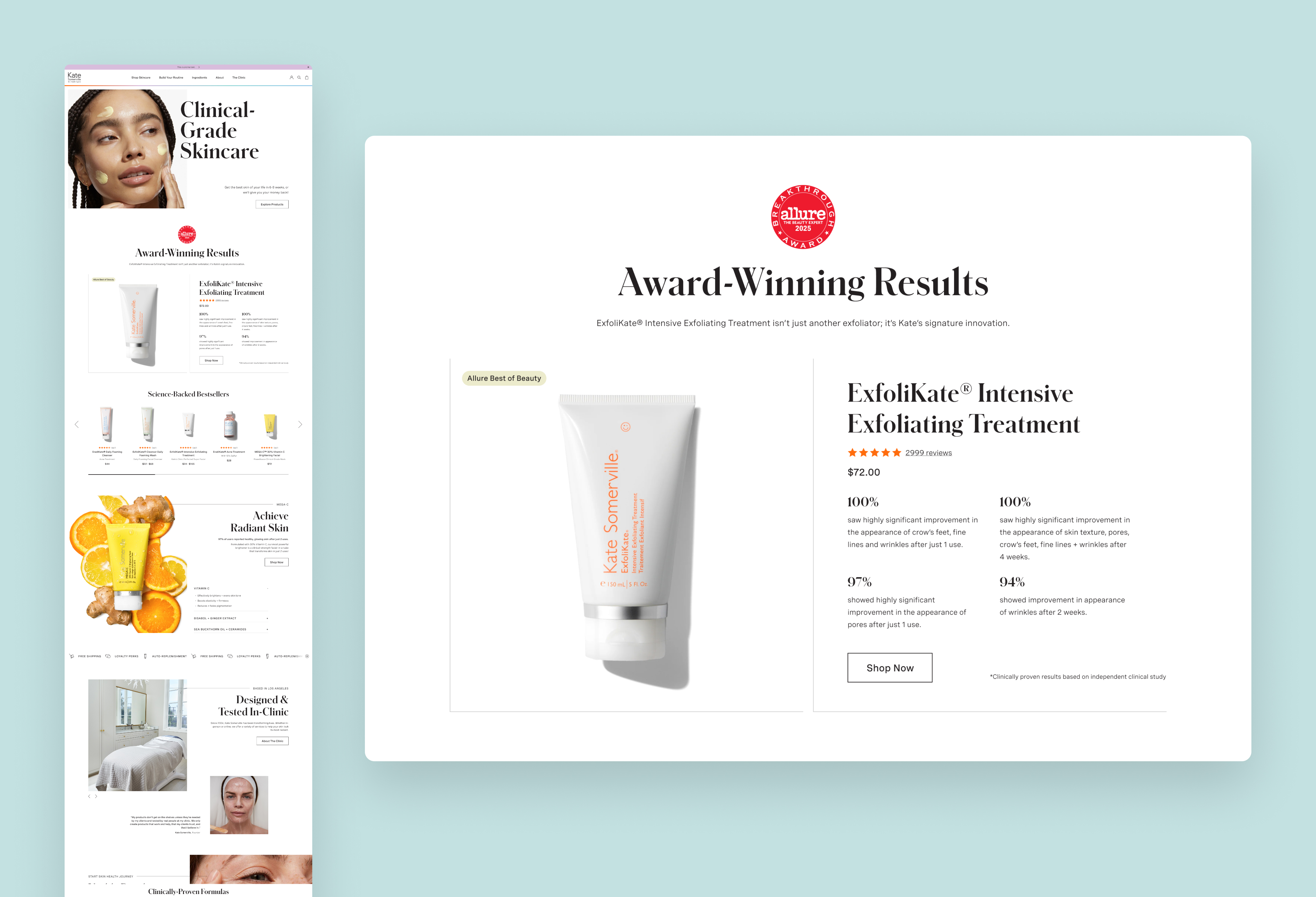
Test No. 1 focusing on the Exfolikate Intensive Exfoliating Treatment – one of the top selling products.
Iteration 2:
The Daily-Essential Product
THE HYPOTHESIS & DESIGN
I updated the module to feature EradiKate® Sulfur Cleanser. I hypothesized that a daily-use, approachable product would lower the barrier to entry compared to a occasional-use, niche treatment.
THE OUTCOME
Conversion rate and revenue per visitor lost to the control once again, and sales for this product declined by 7%.
NOTES & CONSIDERATIONS
With no promotional sales occurring during this period, and the module properly deployed, it became clear that the issue perhaps wasn't the product choice but potentially a problem concerning user engagement.
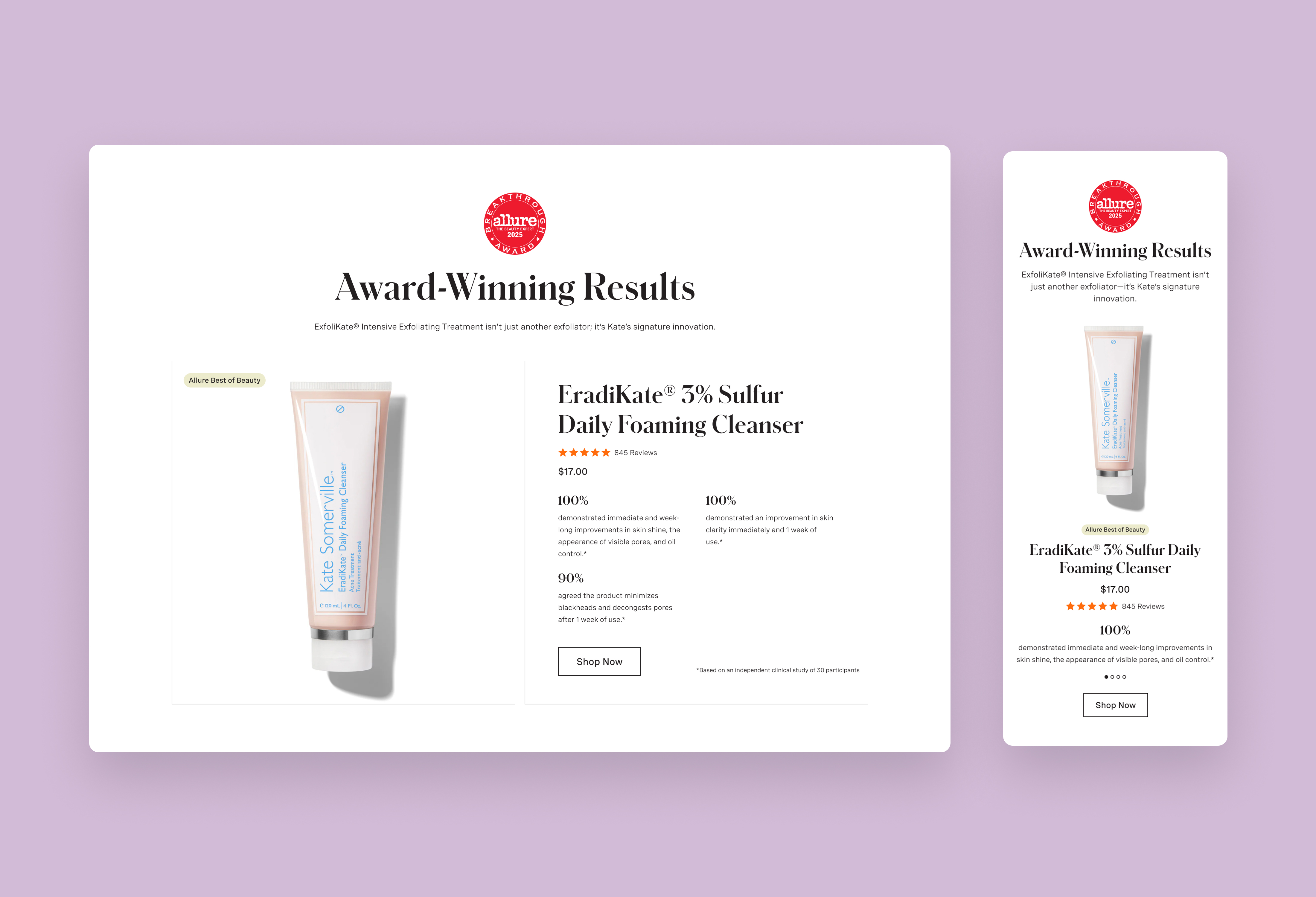
Test No. 2, focusing on the Eradikate 3% Sulfur Daily Foaming Cleanser.
The Research Pivot: Discovering Attrition & Bias
After the failure of the first two iterations, I re-examined user data in Microsoft Clarity. This is where the strategy shifted.
INSIGHT 1: Scroll attrition
I discovered that scroll attrition was massive on both mobile and desktop; users were rarely scrolling past the hero image, meaning they never even reached the discovery modules.
INSIGHT 2: navigational bias
Heat maps showed that users were diving immediately into the global navigation to start their journey, negating much of the home page and its respective modules.
NOTES & CONSIDERATIONS
These findings confirmed that the product-first modules failed not due to content, but because they failed to align with the bulk of user behaviors.
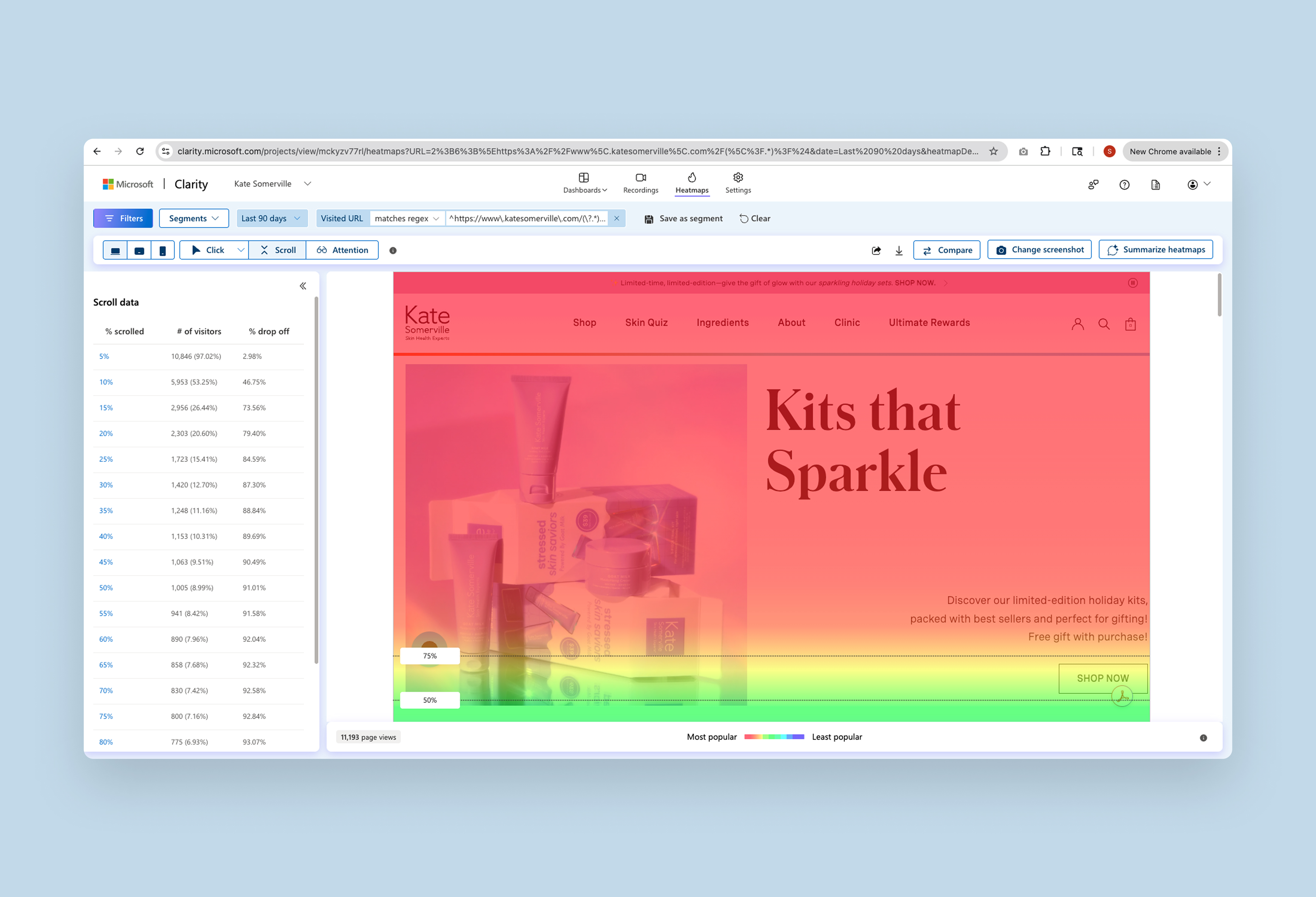
Heat mapping showing user scroll depth.
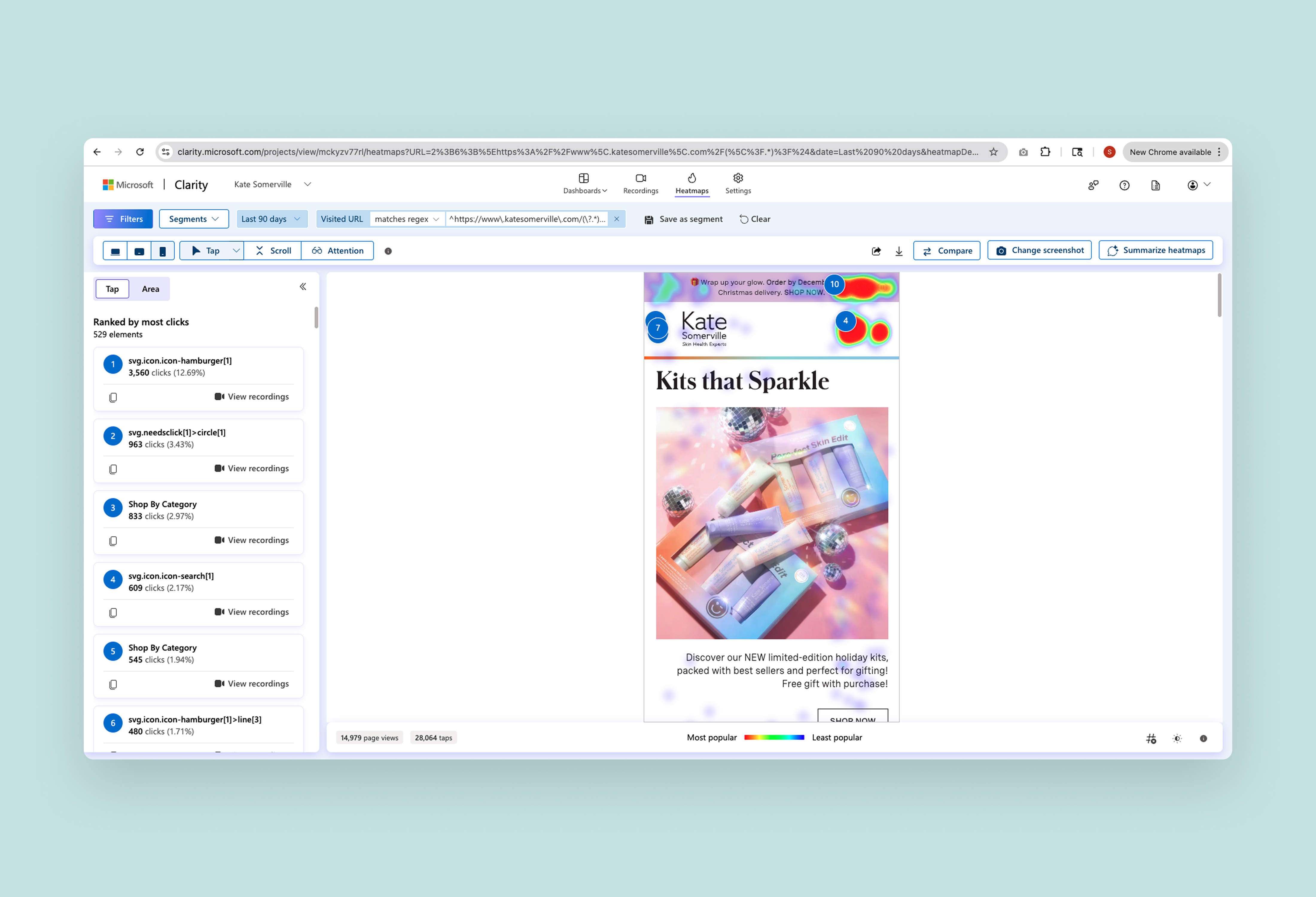
Heat mapping showing user engagement zones.
Iteration 3:
The Navigation Shortcut
With the scroll and engagement insights, I pivoted the strategy away from a single-product spotlight. I recognized that a single-SKU focus was too narrow to move the needle for a diverse customer base as it lacked the discovery equity to serve different user intents. To drive a meaningful lift in conversion and revenue per visitor, there needed to be a more comprehensive, system-level approach.
THE HYPOTHESIS & DESIGN
I designed "Quick Nav" sub-navigation pills sitting directly below the main header, placing discovery where the users were already clicking.
THE OUTCOME
While aggregate metrics showed initial friction, segment analysis showed this discovery feature was a win for direct traffic audiences:
CVR: +20.0%
RPV: +27.8%
AOV: +8.6%
NOTES & CONSIDERATIONS
Even despite a new product launch during this testing period, the Quick Nav feature remained impactful.
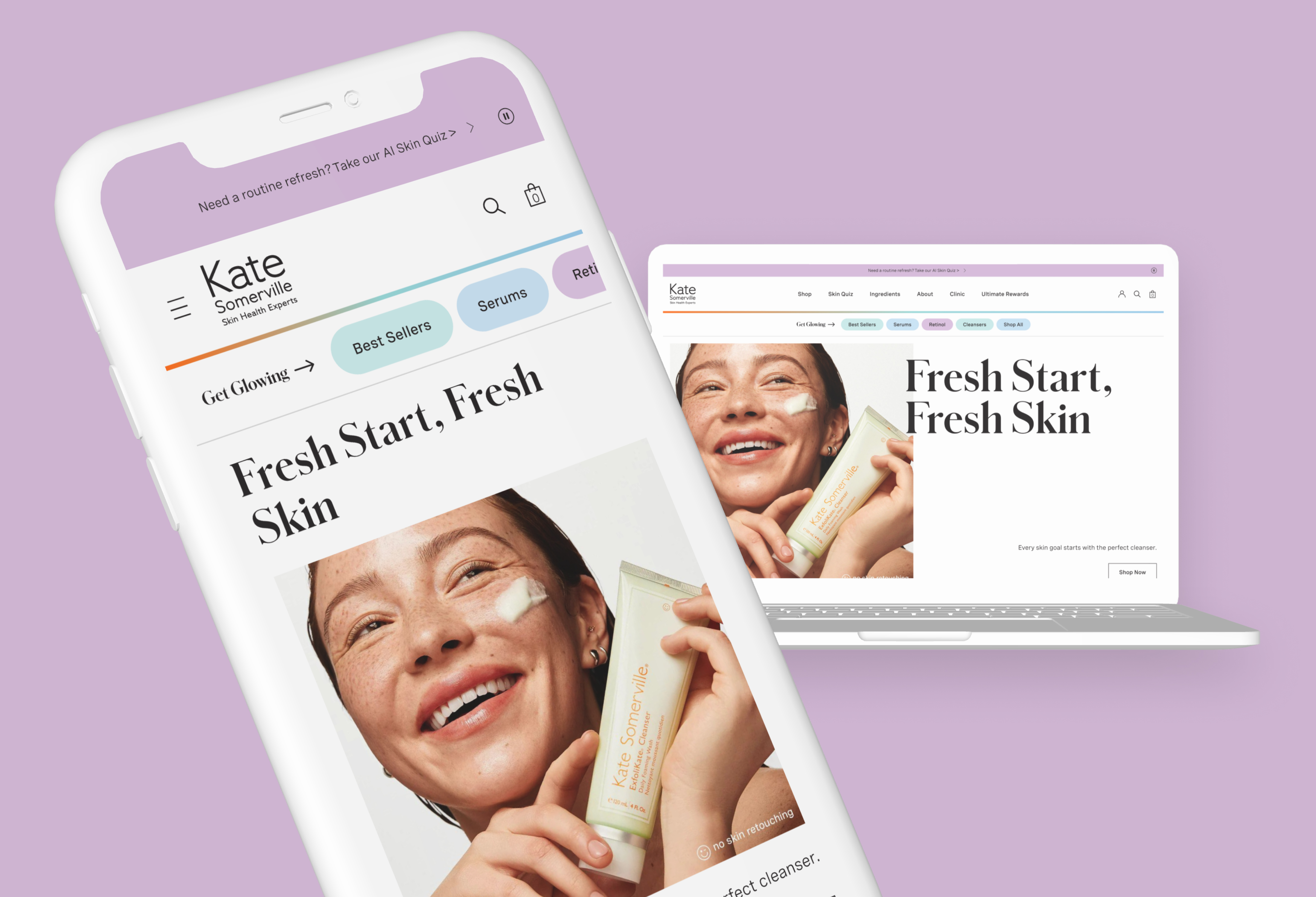
Mobile and desktop mockups featuring the Quick Nav.
The Impact: A +27.8% Lift in Revenue per Visitor & a New Site Feature
Based on the strong performance among high-intent audiences, the "Quick-Nav" sub-navigation has been formally adopted as a core, permanent site feature. Since then, the feature's showing strong engagement levels across both desktop and mobile, proving that the +27.8% in RVP and +20.0% lift in CVR was a scalable indicator for broader success.
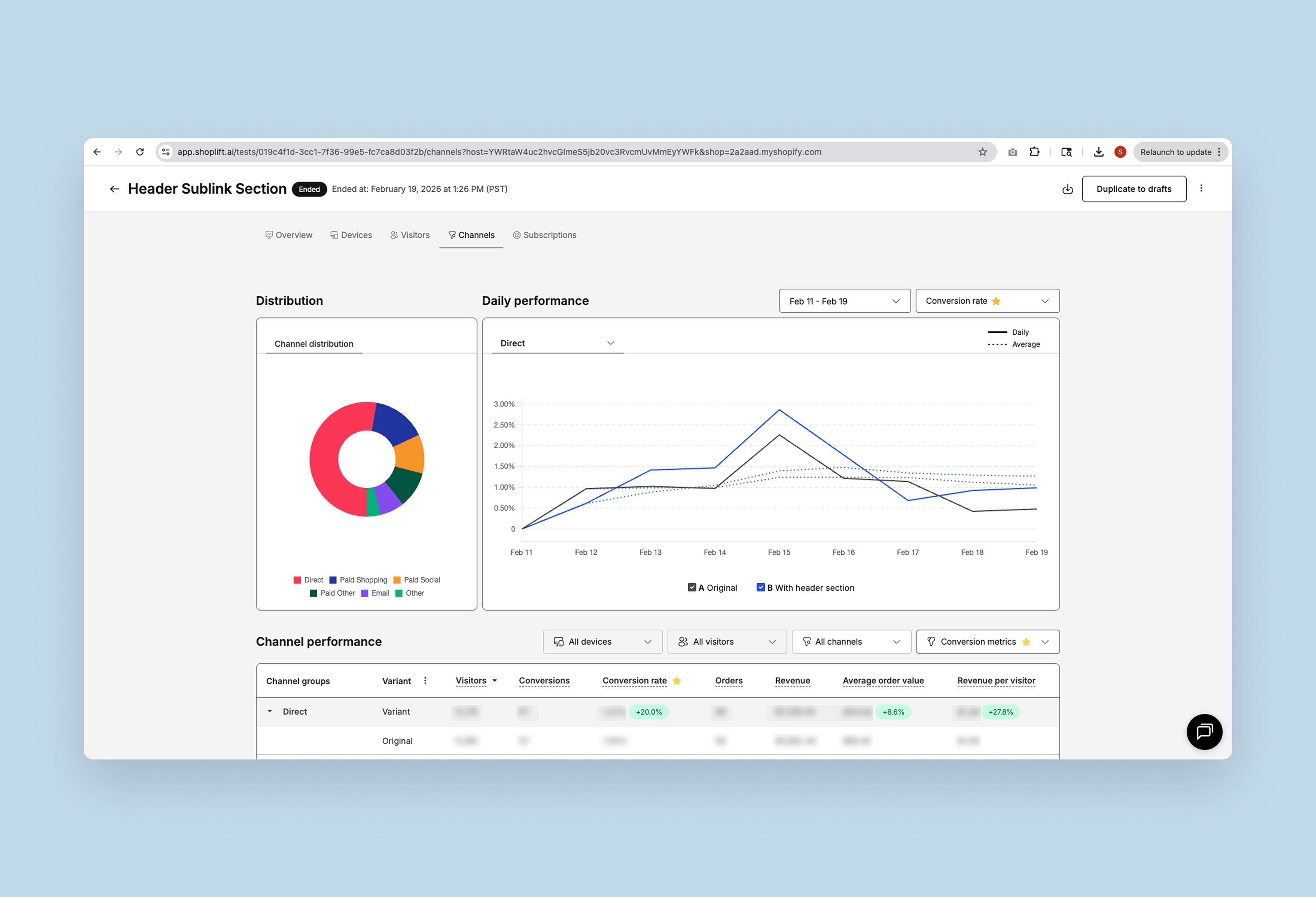
Shoplift dashboard metrics.
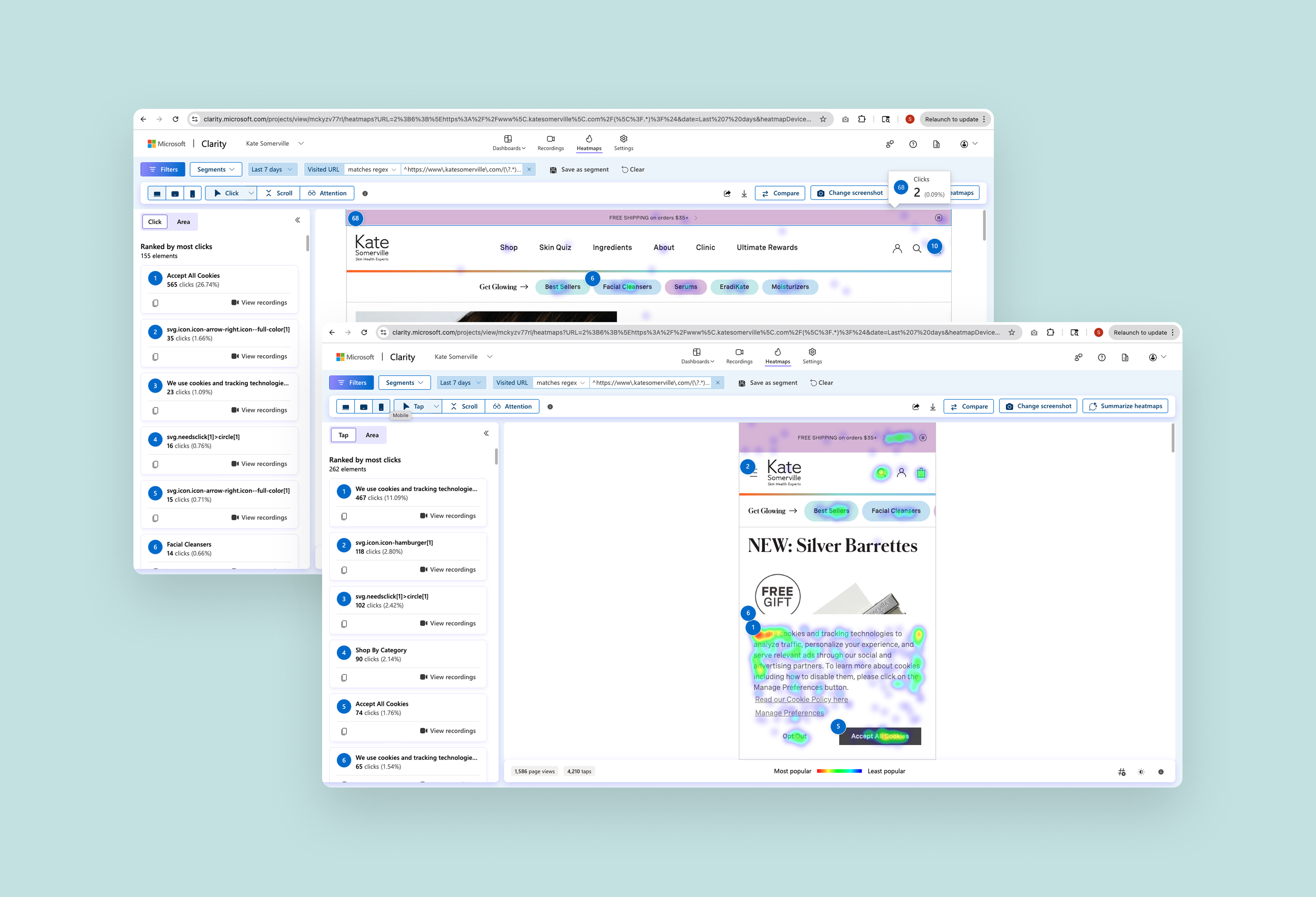
Heat mapping showing the engagement wth the Quick Nav.
We are now pivoting the product roadmap toward a comprehensive PDP overhaul. Since the PDP is the point of highest intent and closest proximity to conversion, the next phase focuses on addressing exactly "how" users choose to purchase skincare.
To gain insight, I used Gemini's LLM to analyze ~1.2 million Reddit discussion points regarding skincare purchase intent. This research revealed a fundamental shift in behavior: consumers now prioritize ingredients over brand narrative and science over trends. The next iterations of the PDP design will directly highlight these features to align with the modern demand for functional proof.
This project was a humbling exercise in patience and strategic re-evaluation, requiring several rounds of stakeholder alignment and a willingness to challenge my own initial assumptions. My persistence and ability iterate, and pivot toward a more meaningful research methodology ultimately transformed a struggling concept into a successful site-wide rollout, and I take pride in the resolve required to see this project through.