CASE STUDY NO. 2
TRUBAR
"Start with dessert flavors people genuinely crave and then design the bar with clean, plant-based ingredients that support fullness and steady energy." – TRUBAR

"Start with dessert flavors people genuinely crave and then design the bar with clean, plant-based ingredients that support fullness and steady energy." – TRUBAR
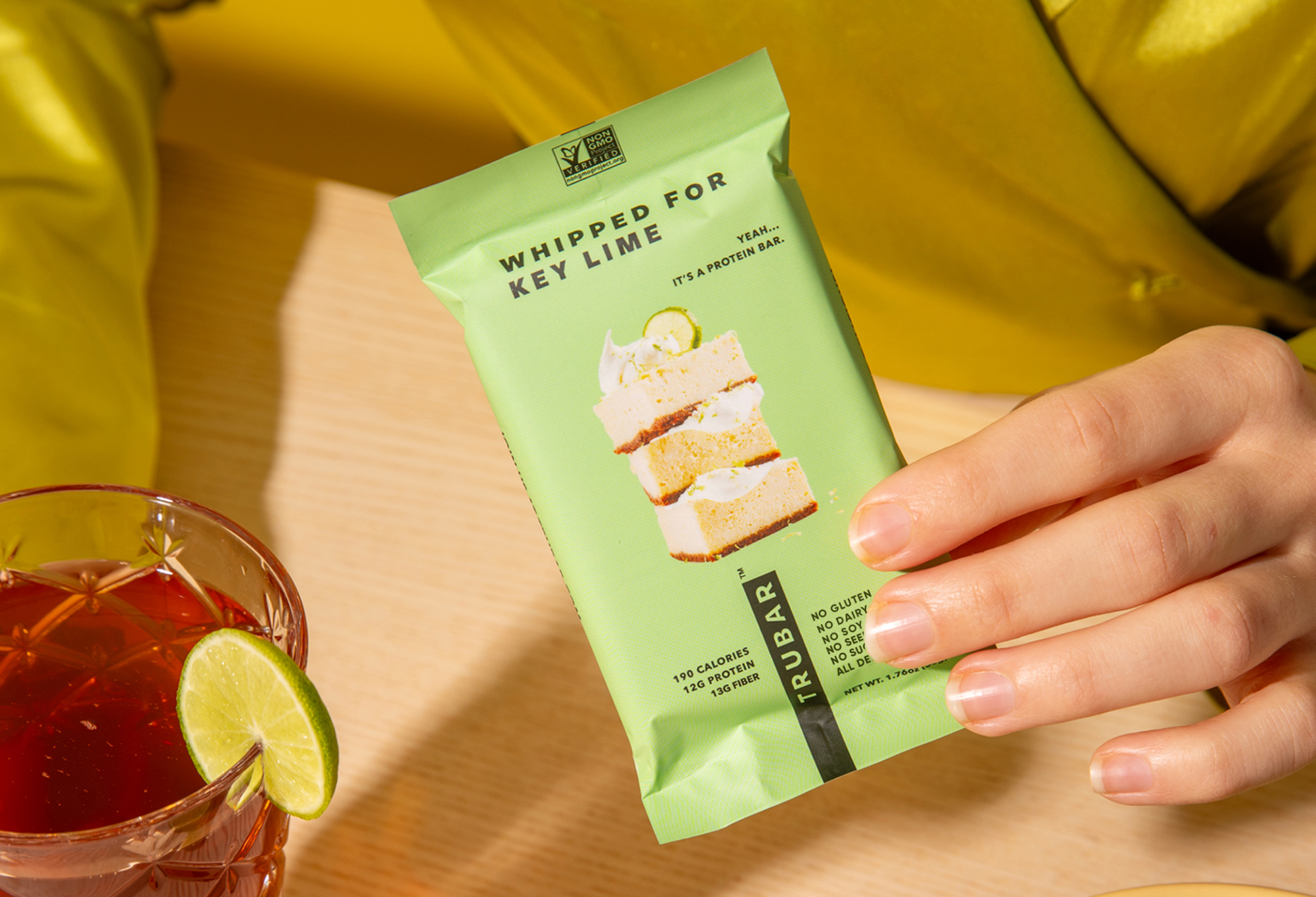
TRUBAR is a female-founded snack brand that aims to bridge the gap between functional nutrition and dessert-like indulgence. Established by Erica Groussman to offer a cleaner alternative to chalky, processed protein bars, the company has grown into a 100 million dollar business known for its plant-based and dairy-free products. TRUBAR currently has a massive retail presence at Costco and Target, maintaining a bold, playful brand identity that speaks to health-conscious consumers.
I audited revenue and user session data within Shopify and Microsoft Clarity to identify friction points in the existing purchase funnel.
I compiled a prioritized roadmap of features and enhancements designed to optimize the e-commerce experience through iterative testing.
I acted as the primary point of contact for TRUBAR stakeholders, presenting design strategies and securing buy-in for new testing initiatives.
I conducted comprehensive research into the protein bar industry to align our design decisions with current consumer expectations and nutritional trends.
I designed the specific product card and collection page UI, focusing on integrating nutritional data into a clean, mobile-first layout.
I built and deployed the full test experience in Visually, leveraging AI-assisted development and custom UI prompts to execute the design vision.
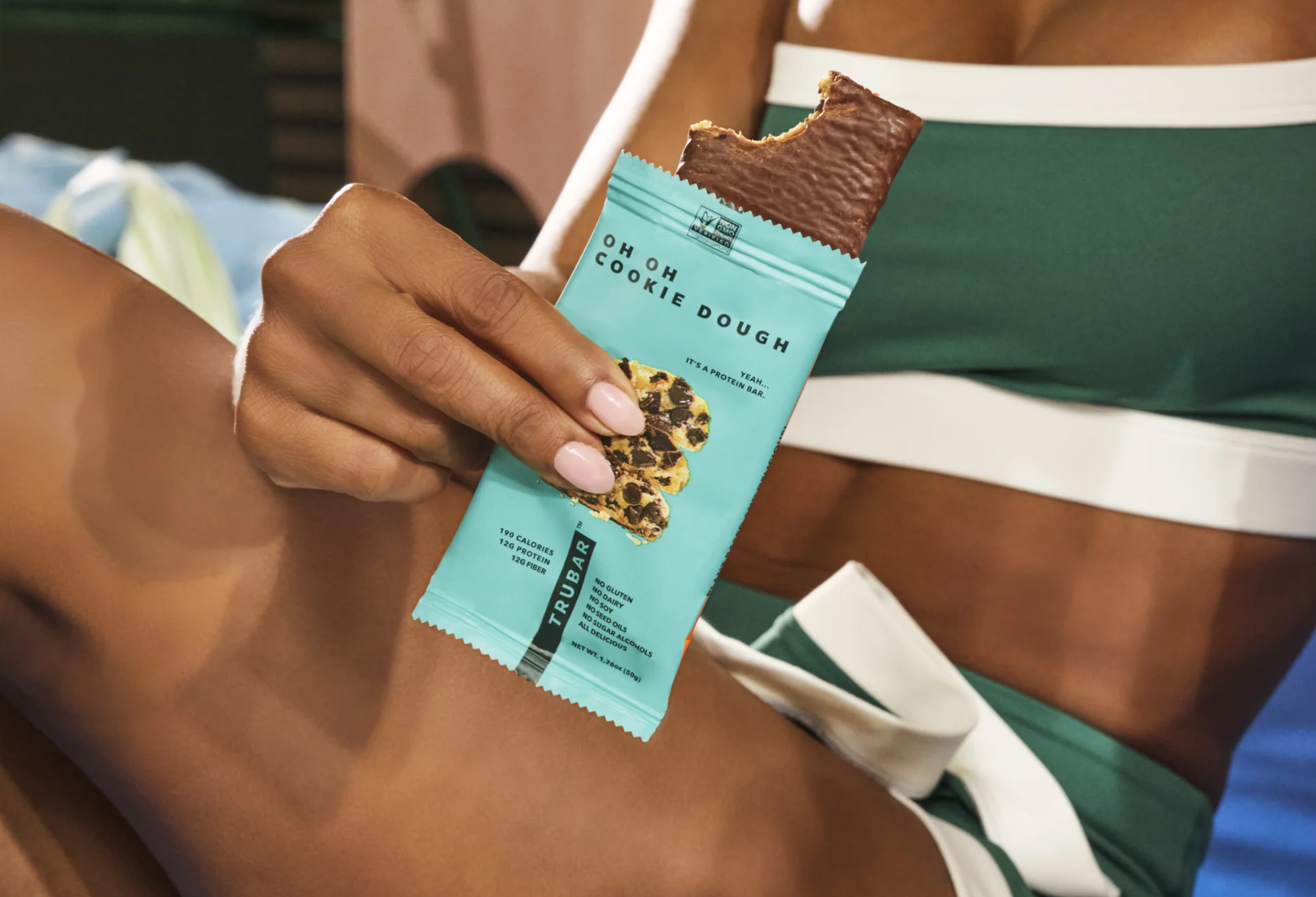
TRUBAR’s brand identity is built on the intersection of taste and fuel, yet the D2C experience was failing to communicate the fuel side of that equation effectively. While the physical packaging clearly highlights simple ingredients and high-performance macros (Protein, Fiber, and Calories), the digital experience did not.
Furthermore, dietary differentiators such as being gluten-free, soy-free, and free of sugar alcohols or seed oils were buried, forcing users to hunt for allergen information. This lack of transparency created a disconnect for health-conscious shoppers who need immediate validation that a product fits their dietary lifestyle before they commit to a purchase.

Before the design began, I analyzed consumer behavior trends within the CPG and nutrition bar sectors. Three main trends stood out:
According to Innova Market Insights, taste and convenience are the primary drivers for snack bar purchases, often outweighing pure functionality. However, there is a growing trend of healthy indulgence, where consumers seek products that provide emotional satisfaction (flavor/texture) alongside physical benefits.
Research from Glanbia Nutritionals found that modern consumers are increasingly analytical. They look for high protein and low sugar claims as baseline requirements, and they expect these functional fuel markers to be easily accessible to validate their purchase.
Industry data shows a surge in demand for allergen-friendly options. Providing clear indicators for gluten-free, soy-free, and sugar-alcohol-free products is no longer a niche requirement but a mainstream expectation for building brand trust with first-time buyers.
Next, I used Gemini to analyze over 500 individual user comments across 20 core discussion threads from high-traffic Reddit communities like r/nutrition, r/fitness, and r/MacroFactor to identify the primary drivers behind protein bar purchasing behavior. Industry trends matched what Reddit user sentiment:
The market is split between those prioritizing functional utility and those seeking a dessert-like experience. One segment favors short, recognizable ingredient lists despite less appealing textures. Others choose products that mimic traditional confectionery to satisfy sweet cravings while meeting nutritional goals.
Savvy shoppers audit the fine print to avoid additives like sugar alcohols that cause digestive distress. While high fiber is valued for satiety, many users rely on scanning apps to identify and skip artificial sweeteners. A "clean label" remains a primary driver for brand loyalty.
A major theme in design-focused subreddits is the success of the RXBAR "Ingredients on the Front" strategy. Users praise packaging that eliminates marketing "fluff" and places the most critical data (egg whites, dates, nuts) in a high-hierarchy position. They contrast this with "loud" packaging where the word "PROTEIN" is huge, but the actual gram count is tiny or buried.
Lastly, I did a competitive audit of RXBAR, David Protein, and Huel to evaluate how industry leaders align their digital interfaces with evolving consumer nutritional priorities.
Macros are cited as simple, integrated counts, prioritizing radical transparency and clean-label visibility.
The UI uses high-contrast, emphasizing protein and calorie counts in large, bold type. Ingredients are secondary, favoring a fast macro audit for utility-driven users.
Huel displays macros via modular icons within a balanced nutritional system. Ingredients are listed with clinical precision and categorized by functional benefit, citing protein in the context of total meal completeness.
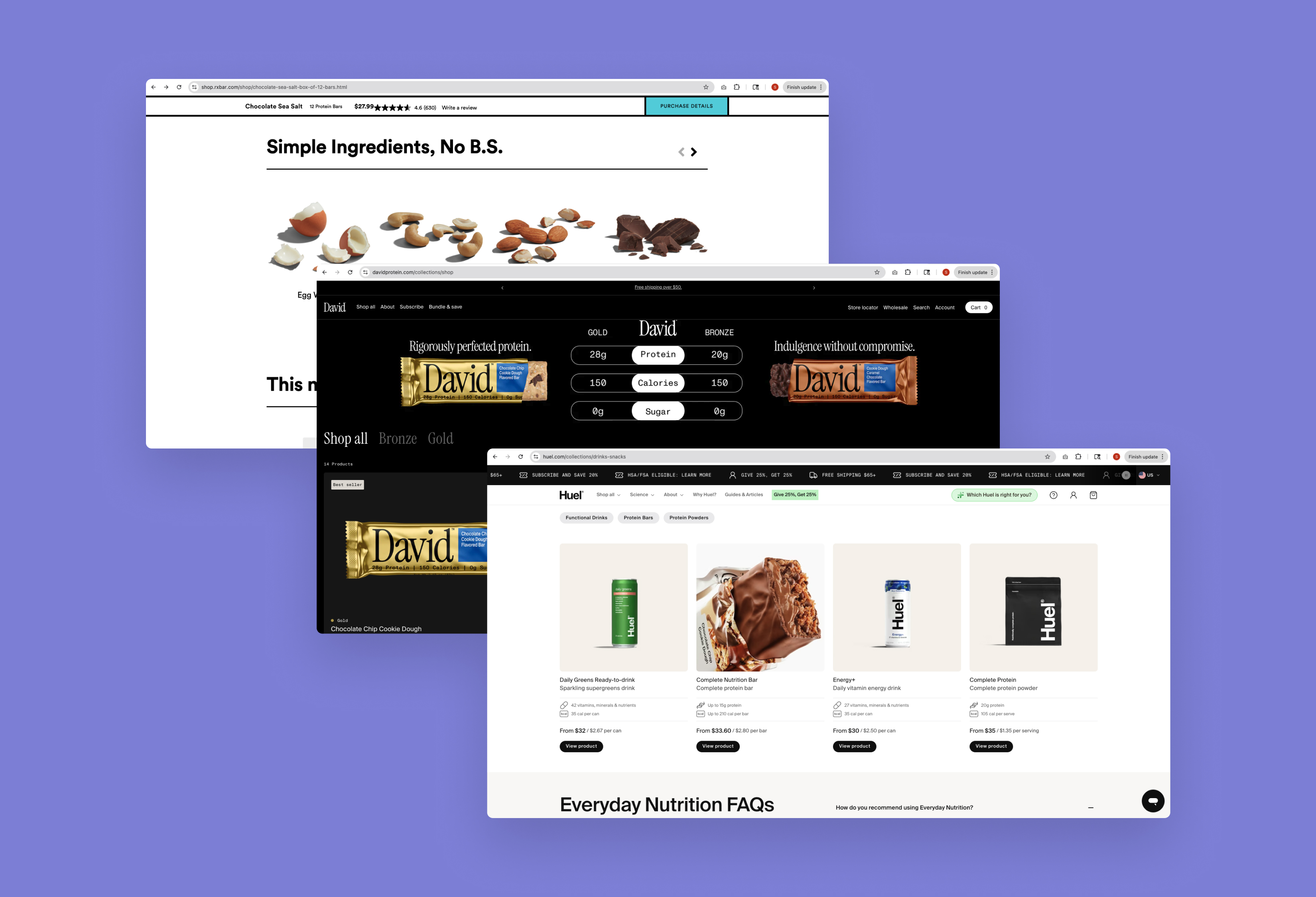
Macro disclosure UI for RXBar, David Protein, and Huel.
I hypothesized that surfacing macros directly on product cards would mirror the transparency of TRUBAR’s physical packaging, providing first-time visitors the immediate "fuel" validation needed to convert.
The goal was to eliminate "information hunting. By transforming the collection page into a comparison tool, I aimed to streamline the decision-making process and reduce the need for users to click back and forth between product pages.
I initially color-coded badges to match each bar, but the variety of color created significant visual clutter. I pivoted to a neutral, unified palette to ensure the vibrant packaging remained the hero while the nutritional data served as a clear, secondary layer.

The three iterations of new product cards, showing macro counts for calories, protein, and fiber.

The old product card vs the new design.
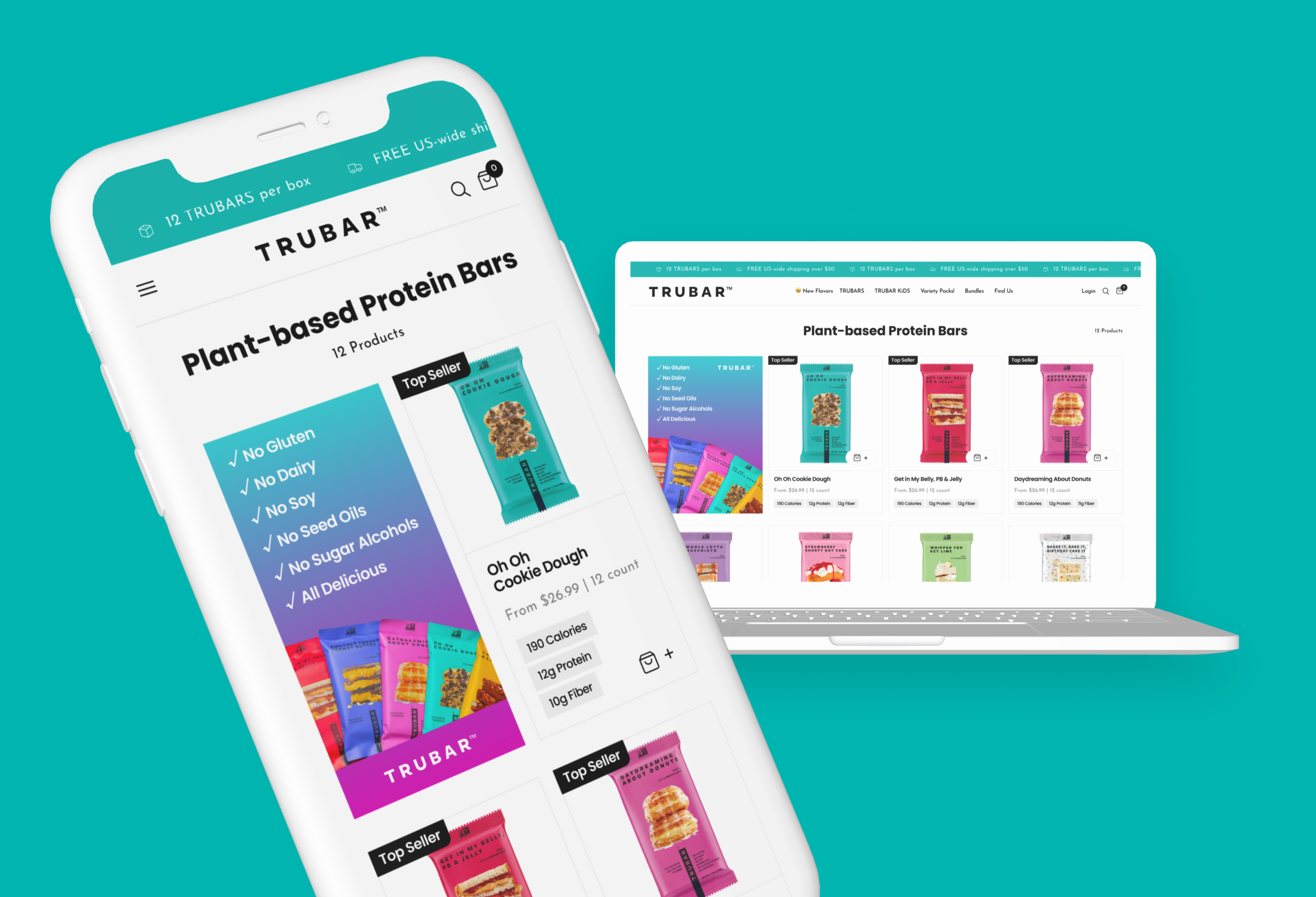
Mockups of the new collection page experience.
The variation resulted in an 8.2% drop in conversion and a 21% relative decrease in Add to Cart (ATC) rates among first-time visitors. These metrics provided a clear signal that surfacing nutritional data at the product card level was creating friction and potential cognitive overload during the discovery phase.
The test ran for two weeks to capture two full business cycles. While the results remained statistically inconclusive at the 80% significance level, the consistent downward trend in ATC rates suggests that TRUBAR’s audience prioritizes flavor over macros during the discovery phase. This trend aligns with the initial research indicating that appetite appeal remains the primary driver for snack bar purchases, reinforcing the need to lead with taste while treating macros as a secondary validator.
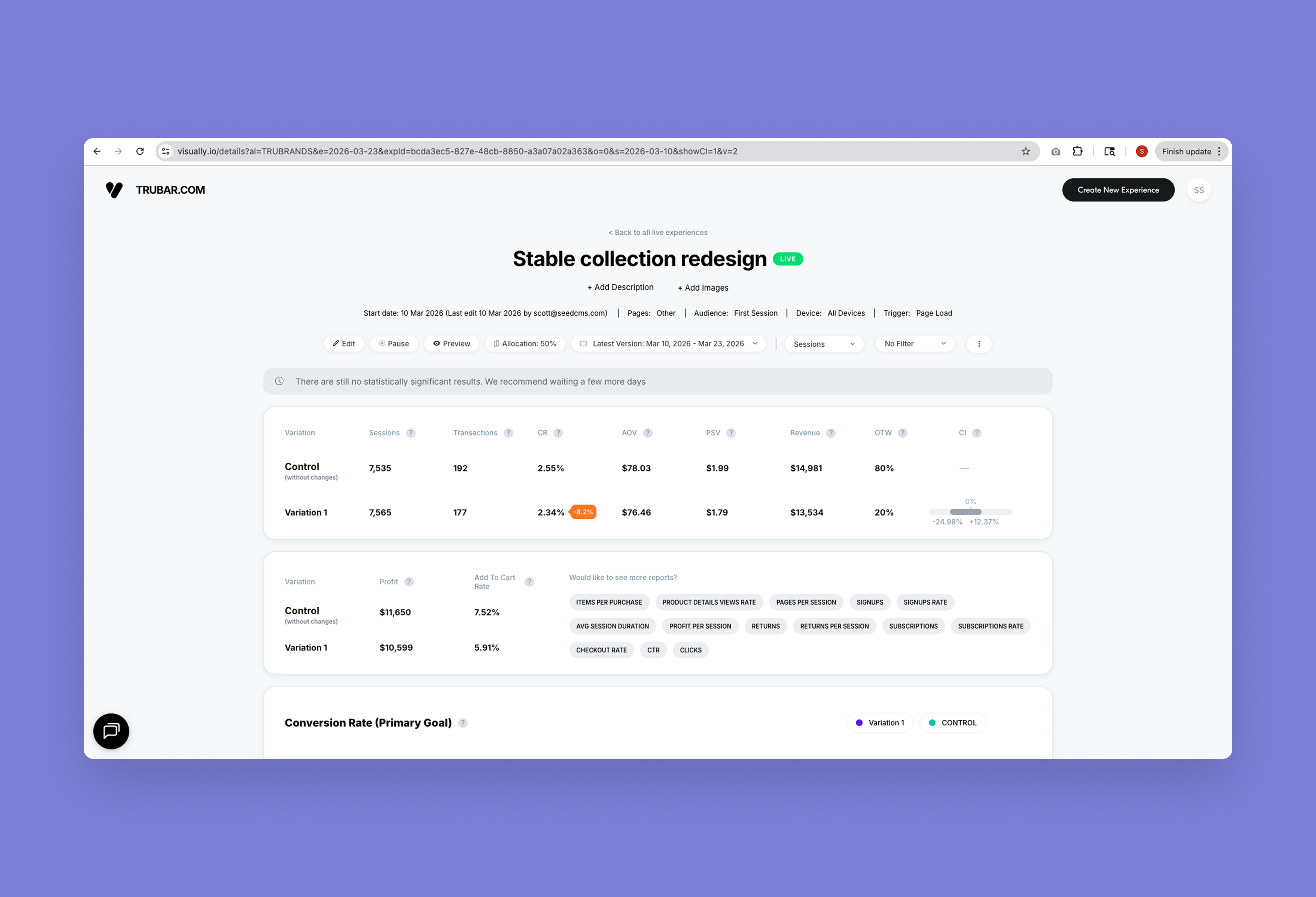
Metrics from the Visually dashboard, showing the decline in conversion.
These learnings suggest that users prioritize flavor discovery during the initial browsing phase. The next stage of testing will focus on the PDP to evaluate a progressive disclosure strategy.
The logic follows that if users are looking for appetite appeal first, the PDP represents a lower-funnel opportunity to introduce specific macros and value propositions. This approach will be a core focus of the upcoming site-wide redesign to determine if it creates a more frictionless path to conversion.
This experience reinforced that digital strategy is not one-size-fits-all. While macro-nutritional signals are often an industry standard, this experiment proved that what drives conversion for one product may create friction for another. Additionally, a negative test result is not a failure, but a definitive data point that clarifies user motivation.
This process also provided some firsthand perspective: TRUBARs actually taste good. The Oh Oh Cookie Dough flavor lives up to its best-seller status, making it easy to see why flavor—not just macros—is the primary driver for the customer.